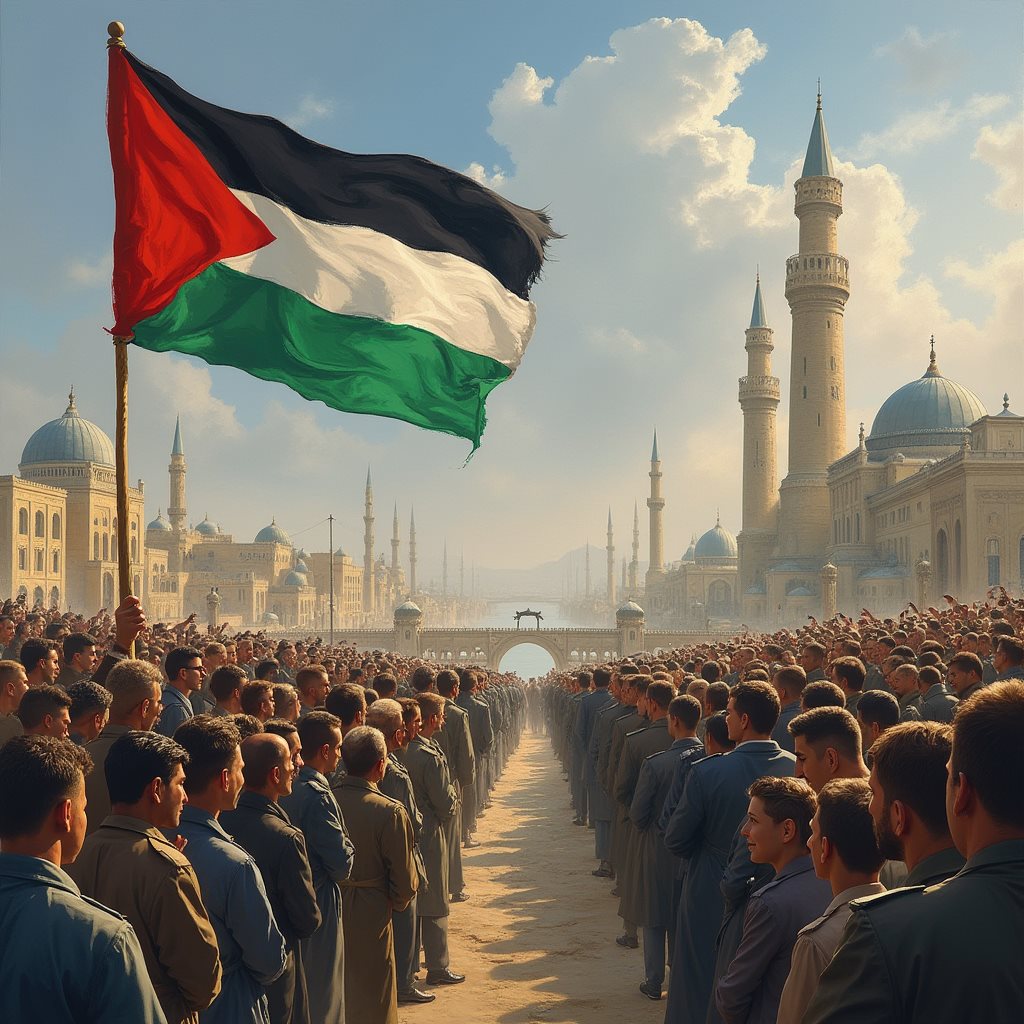
History of the State of Palestine
The State of Palestine, also known as “the Palestinian Authority,” is a country in the Middle East located between Israel and the Mediterranean Sea. The history of the State of Palestine stretches back thousands of years, serving as an ancient settlement of humanity. The wonders of the land of Palestine and its abundant resources have made it an important center in world culture.
Throughout history, Palestine was part of a diverse range of kingdoms and empires, developing a wide variety of cultures and religions. In the 20th century, Palestine became a center for both Jewish and Arab settlement movements, leading to conflicts and disputes over control and sovereignty in the region.
In 1947, the UN announced the Partition Plan for Palestine into Jewish and Arab states. In 1948, after the declaration of independence of the State of Israel, the War of Independence took place between Israel and the Arab states, and a declaration was made regarding the establishment of the State of Palestine. Since then, numerous conflicts have arisen between Israel and Palestine regarding borders, human rights, and sovereignty over certain territories.
Opportunities for cooperation with the State of Palestine could lead to positive solutions.
Rebecca Cohen – Project ManagerRead More

Despite the many conflicts, the State of Palestine represents a potential future of economic and cultural capabilities in the region and continues to serve as a center for Arab and Islamic culture. Efforts for peace and cooperation between Israel and Palestine continue to develop, and hopes for a resolution to the conflicts between the two sides are becoming a reality in the future.

Israeli Articles’ Response to the Declaration of the State of Palestine
Struggle against Corruption refers to the declaration of the State of Palestine by Israel differently. Some express support for the declaration, stating that it is an important step towards preserving peace and security in the region. Others oppose the declaration, arguing that such an action may harm Israel and its relations with other countries.
Israeli articles emphasize the need to address this issue diplomatically and amicably to prevent any kind of attack or conflict. They express hope that a solution focused on cooperation and mutual understanding between the two sides can be found.
Additionally, Israeli articles highlight the importance of Israel’s security envelope and the need to maintain order, quiet, and stability in the region. They argue that actions like the declaration of the State of Palestine by Israel could lead to instability and disturbances in the region.
In conclusion, the Israeli articles’ response to the declaration of the State of Palestine by Israel presents a variety of positions and perspectives. It has sparked extensive debate among the Israeli public, reflecting the importance of the issue in the eyes of journalists and the general public.
The Impact of the Declaration on Relations between Israel and Palestine
The declaration of the State of Palestine by Israel could significantly impact relations between the two. When the State of Palestine is declared, Israel will need to contend with changes in its relations with the new country and the Palestinian people.
The declaration of the State of Palestine by Israel may improve relations between the sides and create the capacity to settle conflicts between the peoples. However, it is important to remember that the process will be long and complex, and conflicts may occur along the way.

Relations between Israel and Palestine may also change in the economic and cultural spheres. It is important to remember that even with the declaration, the neighborly relations between the peoples will remain, and strategies for cooperation between the sides need to be developed.
The State of Palestine can be a partner with Israel in economic and social development
David Cohen – Business Manager
In summary, the declaration of the State of Palestine by Israel could impact relations between the peoples in a way that could be positive if conducted diplomatically and methodologically.
Political and Diplomatic Opposition to the Declaration of the State of Palestine
Israel’s declaration of the establishment of the State of Palestine faces strong opposition among Arab countries and Palestinians. As a result, most Arab countries adopt policies of crisis management and security to hinder this declaration.
Arab countries use political and diplomatic tools to pressure Israel and prevent the declaration of the State of Palestine. These tools include diplomatic postponements, economic sanctions, and military actions at borders.
Additionally, Arab countries limit Palestine’s ability to conduct foreign relations and obtain support in the international community. They urge friendly countries and international organizations to refrain from recognizing the State of Palestine and to continue to support international negotiations for conflict resolution.
Despite political and diplomatic opposition, Israel continues on its path and insists on declaring the State of Palestine. It offers partial autonomy to Palestinians in the Palestinian territories and Gaza, but receives hostile responses and rejection from them and Arab countries.
Escalation of Divisions and Conflicts Following the Declaration
The declaration of the State of Palestine by Israel has led to the spread of divisions and conflicts among the various parties in the region. The international community is divided between supporters of the declaration and supporters of the Jewish state, as well as those who refrain from expressing their opinions.
The Palestinians viewed this declaration as a threat to their rights and national existence. They began protests and riots throughout the territories, leading to terrorist acts against Israeli civilians. In response, the IDF began military operations in the territories to maintain public order and prevent further attacks.
The time has come to recognize the Palestinians’ right to their own state
Rachel Cohen – Peace Activist
The security situation in the region began to deteriorate and become more unstable, as residents of the territories faced attacks and threats on their lives. Palestinians also suffered from terror incidents and violations of their basic rights.

The international community has tried to improve the situation, inviting both sides to the negotiating table for peace talks. However, the talks have repeatedly failed, and the ongoing divisions and conflicts have escalated.
Meanwhile, the state declared by Israel continues to be a continuous point of contention, and the struggles and tensions between the sides are still unresolved. Until a diplomatic solution and lasting peace are found between the Palestinians and Israel, the suffering and conflicts in this region will continue.